We spent time at a conference for New Farmers in April at the Dieppe Farmers Market. While we would love to report on what all happened there because we were impressed with everyone there, we have a couple of reservations, mostly because we were not officially invited as journalists and second, because we are not new farmers.
As community journalists we want to establish a foundation of trust with anyone we work with. Showing up uninvited, taking pictures and notes and then publishing stuff doesn’t work for us.
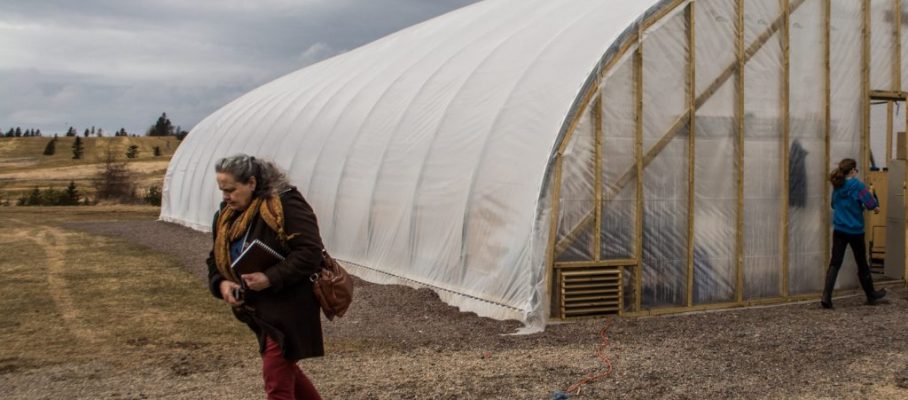
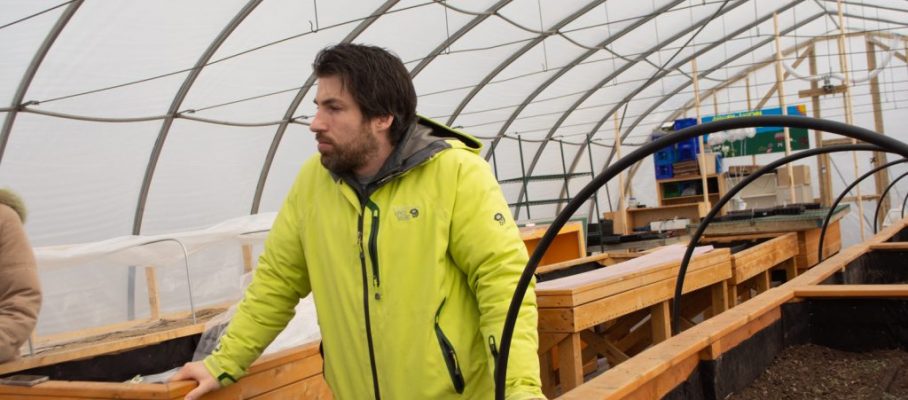
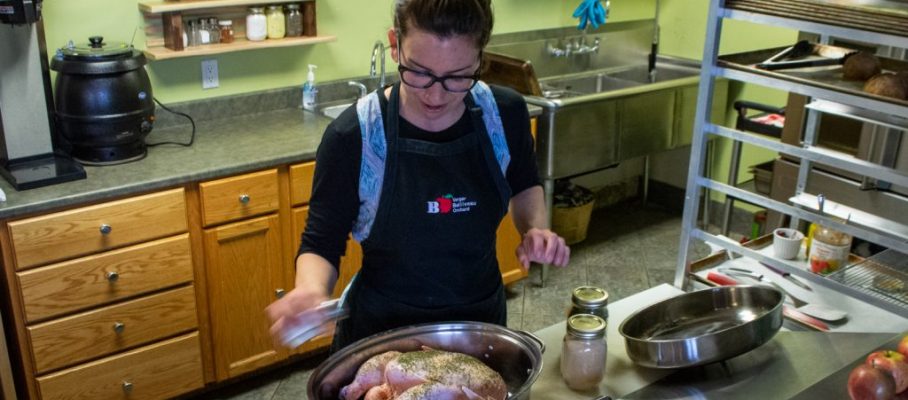
So here are a couple of what we hope are flattering photos and the promise that we want to do more work with this group. They definitely fit into the parameters of our food beat. We most likely will track down the people we talked to and photograph and interview the hell out of them because so many seemed like great resources of knowledge and experience that many others would benefit from.
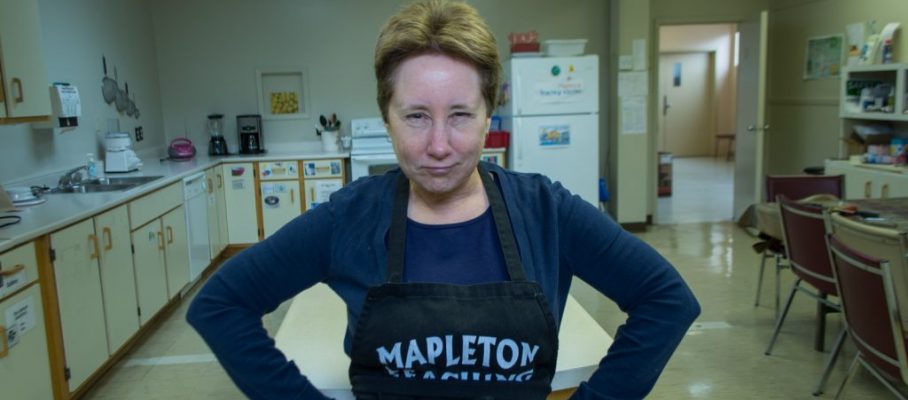
There are a lot of people doing a lot of good work in the food movement in the Greater Moncton Area. Why do we have a big picture of Janet Hamilton for the first issue or our Food Movement Beat? It’s because she is all about teaching that most basic and powerful skill of cooking, a skill that if learned, it could go a long way to fixing a dozen or more of the world’s problems. Anyone familiar with the shortcomings of our food system knows this is not exaggeration.
We became students of the food movement after our Community Food Mentor programs with Alya Nouasri and Janet, Elaine in June and Archie in January. Once we started to talk about the issues and the food system and all its effects on health, culture, behaviour, the economy and on and on, we started to realize how food really is something people can organize around in myriad ways and make a difference.
The paralyzing question is: Where to start? Food is an astonishingly big topic. But after nearly a year of meeting many of the people who make up the movement — because Moncton Beats is about people who make up the heart of the community — we keep coming back to that one powerful activity that makes everyone — including children — experts on the food system and that’s cooking.
Once you start cooking, then you start appreciating food and then you start looking for good food, maybe buying from farmers markets, talking to farmers, maybe growing your own vegetables or keeping a couple of chickens, and then wondering how in the world all that food got into the grocery stores from who knows where and what’s the true cost of it being so cheap, and on and on.
Whether it’s a one-pot meal for single people living on low income, or a baked potato for children who don’t know where potatoes come from, many start the journey with Janet in her teaching kitchen.
There are other teaching kitchens, other people teaching cooking, but whenever there is a meeting about food in the Greater Moncton Area, be it about policy or pickles, you’ll probably find Janet there putting in her two cents, and taking home the peelings to make soup stock.
Despite her misgivings, I decided to include Elaine Mandrona in this first issue of our Food Movement Beat because so many of the themes of her coming to New Brunswick echo those of many of the people we talked to in the last year, especially the young farmers.
She first came to New Brunswick from Connecticut via Wisconsin in the early seventies when she and her partner at the time visited expat friends who said this was the place to start a new life away from everything that was wrong with the world: war, social inequality, urban sprawl, crime, degradation of the environment.
New Brunswick was beautiful and pastoral, the people friendly and welcoming and the land was cheap. Really cheap. They had found a haven.
“And we believed change was imminent. We didn’t know it was still 45 years away,” she says.
Back to the land — Corn Hill
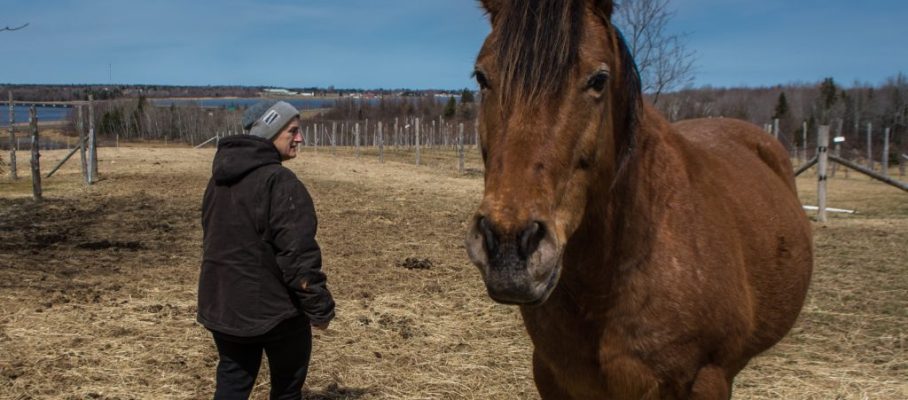
They first settled in the Corn Hill area. Elaine and her partner had a tough year of it when winter came. “We moved into a wreck of a house that should have been knocked down,” she says. “I don’t know why we thought a cook stove could keep us warm over the winter in a cold and drafty farmhouse.” A neighbor rescued them by giving them an old wood heater.
The idea that many of these young people had was they would go back to the very basics of life, back to the land, and live without the conveniences they believed were at the heart of all the problems they left behind. Inspired by authors such as Helen and Scott Nearing and their book Living the Good Life, they engaged rural life in New Brunswick.
Of course, no book truly prepares anyone for reality and the hardships they endured are sometimes hard to listen to. Their neigbhours were friendly and helpful, but “I think they thought we were nuts to want to live without electricity when they had just got it in the fifties,” she says.
Back to the land — Cedar Camp
That relationship broke down and she started a new one and a new idea of an intentional community in Cedar Camp in the Waterford area not far from what is now Poley Mountain. Five hundred acres cost $40,000 then and the idea was that each person would build their own house and work the land together.
The first winter was a frigid nightmare again. “We lived in a cabin made from scrap lumber and tea box lids. We burned alders for heat.” The next summer Elaine built her house by a brook but her partner moved in, too.
“I built my own hexagonal tiny house, ten feet on a side. As a woman it was important for me to learn some simple carpentry skills and do that. My partner and I lived there off the grid for 10 years using micro hydro and solar panels. We ran lights, a radio and a small refrigerator. I figure that I earned a lot of green footprint credits living that way.”
Then the others in the community could not get enough money to make the community work so Elaine and her partner took over the farm.
They tried a market garden but there was no farmers market back then and organic produce was not valued in rural New Brunswick. The closest thing to a venue was selling off the back of trucks every Wednesday at the livestock auction in Sussex.
Eventually, the living off the land idea gave way to other ideas about how to earn a living and Elaine went into business for herself. “Being self-employed gave me a lot of satisfaction and independence. I ran my own stained glass studio and craft shop, Glass Alley (in Sussex), for 18 years and later became a massage therapist and nutritional consultant. I’ve been practising massage for 25 years now, soon to retire.”
Back to the land — Moncton
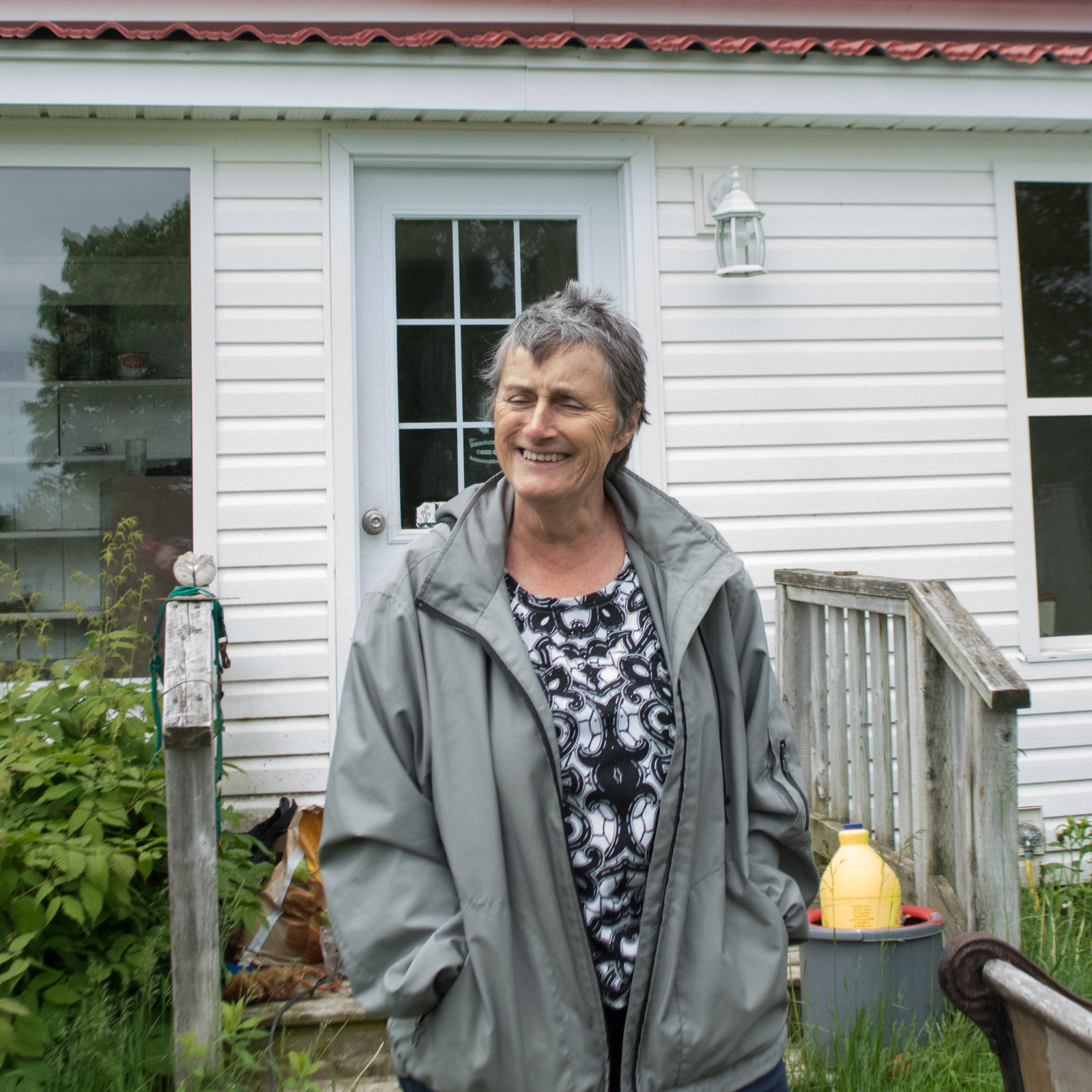
“Archie and I moved to Moncton in 2005 to start a different life, one in the city and close to our cottage in Cocagne,” she says. “We have a big yard and I felt bad that I was not growing any food.”
That desire to grow food again manifested in a couple of garden boxes that grew enough food to encourage her to build a few more. The more food she grew the more boxes she wanted. Starting on such a small scale without the desperation of having to make it pay or store it for winter made it more enjoyable. She also wanted to share the experience and invited people. A couple of young women took her up on it.
“Then I took a Community Food Mentor program and it opened my eyes to all that was going on in the area around food. The program also encouraged me to come up with my own program that could expand food capacity in my community. Now I have the City Farming Adventures group and am running an intergenerational and multicultural garden project with seniors in partnership with the Moncton Boys and Girls Club.”
There is no talk of a market garden, though. She’s in a different place now. “I don’t want to sell food. I just want to grow food with other people, especially children because they love it so much. People are coming back to the land. They’re realizing how important it is to connect with their food and how it is grown.”
She says they’re coming back to the land. “It’s just 45 years later.”
“If they plant it, they’ll be more eager to eat it,” says L’Ecole Abbey-Landry teacher François LeBlanc of his students. “At basis we need to eat better.” If there is one reason why teacher François LeBlanc got involved in establishing a greenhouse project for the school in Memramcook it’s that.
But it turns out to be more than that. “I’m more just trying to find different ways to teach. I like to tinker with things and I know kids do, too.” If this sounds like a teacher who likes to do things with his students, you’re probably right. And if you think he’s getting as much as the kids out of the program you’d be right about that, too. We talked to both François and Véronic Cormier, the coordinator of the program, and throughout it was obvious they were on the journey, too. The greenhouse, now that it’s up and running, has got their imaginations fired up with all the possibilities for education and for the community.
The possibilities
In the hour or so we talked they spoke of the possibility of feeding the school and feeding perhaps the nearby seniors complex, as well as having a Community Supported Agriculture (CSA) program. They hope to find their place in the agricultural scene of the area. “One of the challenges is to find our niche,” says François, “maybe herbs or microgreens. No one here is doing microgreens.” They talked about having one crop they specialize in to pay the bills, as well as doing experiments with “weird” vegetables.
While not an expert, François is an avid gardener. “I’m self-taught. I do it on the weekend and at night, that’s when I do it. I try to stop that and get my school stuff done.” Véronic is also self-taught but is also studying nutrition at a school in Moncton.
The educational value of the greenhouse cannot be underestimated but there are challenges there, too. “It’s tough because you do have to follow a curriculum and we’re working closely with another school,” he says. “But I think the school vision with the principal we have now (Pierre Roy) is to have project-based learning and real-life things. He loves the whole entrepreneurship thing, getting kids involved.”
The business of greenhouses
The greenhouse is industrial sized at 33’ x 75’ and has room for whole classes to come in. It was donated by the local golf club who didn’t need it anymore. It was erected by a contractor.
The first day we were there seeds had just been planted but on the second visit the place seemed filled with bedding plants and apparently they had already had at least one sale.
On the day we visited there were seniors from nearby Le Manoir du Mascaret were stocking up on bedding plants.
The children we met that day were Grade 6 students Janelle Bourque and Danika LeBlanc and they had the manner of experienced sales staff. When asked what about the project had impressed them most it was, “M. François trusts us with the money.”
Both girls gardened at home, Janelle for a few years, but this was Danika’s first. She said it was easy now that she had already done it. And she says she loves it. She’s not the only one. “A couple of parents sent letters to the principal,” says François, “and said what we’re doing is helping their kids. Before they didn’t want to go to school. Now they’re loving the whole thing.”
One of the seniors there, Juliette Landry, was a retired Abbey-Landry teacher who said, “Every school should have a greenhouse.” Véronic thinks even bigger than that. “I would love to have another greenhouse and have one for full production and one for education.”
A community greenhouse
But the greenhouse is not just for the school. François and Véronic continually point out the benefits for the community as a place to gather and do gardening and for improving the health of people in the area.
Robert Bourgeois, owner of Belliveau Orchard, also sees the value of the project for the community. He is one of the business people and farmers consulted about how to make the greenhouse succeed. While he doesn’t think it could succeed as a full-blown, profit making business, he does believe in the project and its value to the school, its students and the community. “For the kids to have a hands-on experience to know where their food is coming from is worth something,” he says.
He also says they might think about forming a co-op “so people like me could could invest in it a bit, say, a thousand dollars a year” and with government incentives they could interest others. “It would help the community.”
François says there is still so much work to be done and so much that could be done. “We’re looking to do something for the community. It would be nice for people to jump on and give a hand.”
Shannon Gallant has been the culinary magician at Belliveau Orchard’s Café du Verger since October 2015. She is one of those savvy food people you find everywhere in Vancouver, Seattle or San Francisco. She loves to talk about food because she’s always thinking about food.
In April, we had been interviewing at Abbey Landry School in Memramcook and thought it would be fun to stop for a snack at the Belliveau’s and discovered this exuberant woman behind the counter. In the time it took her to get our order, we learned that she had learned a lot of what she knew in Vancouver and at nutrition school and then farmers markets across Canada and that everything she cooked was local. So we had to interview her.
“Everything I cook here is my own recipe from scratch,” she says. “My recipe or my mother-in-law’s who is Acadian.”
Winning people over lunch by lunch
“The clientele here is used to a lot of traditional comfort food so I’m trying to put a modern spin on it. Some things I will not touch like chicken fricot, those are tried and true recipes,” she says, but she will experiment with dishes like quiche and introduce things she thinks people haven’t tried. She believes she is winning people over lunch by lunch. “Someone will say ‘I never had a quesadilla’ and say, ‘Oh my gosh, that’s amazing.’” She says, “It’s fun seeing people try new flavours, new textures.”
The right person for the job
Robert Bourgeois, owner of Belliveau’s Orchard, said he had a gut feeling she was the one to take the restaurant to the next level. “When someone has a passion, it shows,” he says. They knew each other from Chamber of Commerce meetings and the farmers market and then she approached him with the idea that she could cook for them. “The timing was right,” he says, because they had just finished all the requirements for a license.
They will be renovating this summer with one wall being knocked out and and the restaurant expanded into the yard. “This fall it’s going to be crazy here. Finally, we have something to eat,” Robert says. “Some days on the weekend there are three or four thousand people for the U-Pick.”
Developed menu over winter
Now that the busy season is close at hand the lunch menu is pretty well set, but it took some time to develop. “We used the winter to play with recipes, see what people in our neighbourhood liked. The menu would change every couple of days. Once my lasagna ran out I would try a quiche, once the quiche ran out I would work on a different kind of soup, or a chili or a shepherd’s pie, any kind of comfort food that I could make a little bit healthier.”
Shannon is also having a great time with the community events they’re putting on. “We’re running a program now called The Mini-chef Series so we’re getting kids into the kitchen.” They had one where they had 18 kids in the kitchen and taught them how to make pizza.
More to come
Shannon has “a million ideas” for the restaurant. “Lunch is it right now but I would love to see more tapis, more finger foods, more munchies that you can come and have a coffee or glass of wine and sit with your friends and have a snack to share.”
Is this her dream job? “Absolutely,” she says. “This is my dream job. I’m cooking what I want. I’m using the ingredients I want.” And of course everything is local if possible, some of it from the property itself since Belliveau’s grows a lot of produce. They also source from the butcher shops and bakery in Memramcook. And with all her farmers market experience — including starting one — that makes her really happy.
Shannon seems to have nearly limitless enthusiasm for what she is doing at the restaurant and Robert Bourgeois is giving her all the creative input she wants. It sure sounds like a dream job.
We are at the Marcel Goguen Farm in Cocagne at 11 am to meet Bernadette for a final time before press. Bernadette is not here. Marcel is working in the barn at the very top and must climb down two or three ladders to get to us. We haven’t met him before and we’re not sure if he’s annoyed at us for interrupting his work but it’s soon apparent that it’s important to him that he find out if she’s coming.
Apparently she is across the river at a meeting of Terroir Foods and Agrimarketing (TFA), a year old La Récolte de Chez Nous project Bernadette is involved in. The meeting has gone over and despite several calls to her cell, Marcel just gets some clicking on the phone and then it cuts out. He’s determined to get hold of her. We don’t want to take him away from his farm work but he insists he’s going over to get her and tells us he has to change vehicles anyway since she has the pickup.
Finally, we convince him it’s not a problem and that we’ll go for lunch and she can call us when she gets back.
Meanwhile their daughter pulls into the dooryard and she, too, seems anxious to assure us if we had an appointment for eleven then Bernadette must be on her way. Right then we see a pickup pulling off the road into the driveway at the bottom of the hill. Everybody seems relieved. When Bernadette arrives she apologizes for being late more than makes us comfortable because we know she also has lots of work to do.
As she leads us to the house she mentions off hand that “the kitchen is a mess” (which it turns out really is a mess) but there is none of the concern like there was about being late for our meeting and during the interview we get a sense of her priorities and why everyone around her knew making our meeting was important to her. Near the top of the list is being reliable. “If I say I am going to do something, then I do it.” Her not being there to meet us really was a big deal to her.
A few endeavors
What we wanted to get from this last meeting was a clear idea of all the things she was involved in. We had casually asked Marcel while we were waiting for Bernadette, but apparently it was a perplexing question for him. We may as well have asked How many leaves are in the orchard right now?
Even after an hour of interviewing her, we were still not sure of the extent of her involvement in the community – we suspect she wasn’t either – but we had covered the big ones.
The Cocagne Gang
There was her ten years at the 15 year-old Groupe de développement durable du Pays de Cocagne (GDDPC) — an intimidatingly long Francophone name destined to be shortened to something silly by Anglophones, like TheCocagne Gang. It’s an umbrella group for many past and ongoing projects and programs concerned with the Cocagne River Watershed.
One project intriguing to her is the green funeral project which, if she has her way, has her destined to be buried in cardboard box, sans toxic chemicals, and sans anything else that can’t be composted back to nature as quickly as possible. “We have a meeting coming up and have 30 people interested in coming,” she says.
Then there is the Transition Cocagne program. “Cocagne is the first official Francophone one in the country,” she says, obviously proud of the how forward thinking her community is. The Transition Town concept came out of initiatives in the U.K. Basically, it is about increasing self-sufficiency for when the oil gives out, when the Internent collapses, and when the four New Brunswick seasons become one long summer. But it’s really about a lack of complacency. They try to answer questions like: How would we feed our community?
The food hub
But the really big project right now is the Terroir Foods and Agrimarketing or the TFA food hub set up by the farm cooperative La Récolte de Chez Nous. The food hub’s goal is for local farmers to supply food to all the schools in the Francophone Sud and possibly Anglophone East districts. They would also like to supply any other organization or business that wants good local food.
This project is vital to the co-op as an entity and to the ideals of the food movement generally, namely because it means good food for children and supporting local farming and all the good things that come out of that. “It has the potential to be a key player,” she says. “It is the most important thing I’m working on now because it’s going to create jobs. It’s going to create awareness about local food. I can market my stuff and my neighbour’s stuff through CSAs through the TFA. It’s a way to promote and keep our lands in production and interest young people into farming.”
This project is getting a lot of her energy because it matters. In fact, she gave up her board involvement in La Récolte to be on the food hub board. If it succeeds then it means work for local farmers, possibly more farmers coming into the system and saving yet more farmland.
It was a nearby farm being turned into a gravel pit that got her going many years ago. “All of that (topsoil) pulled out and sent into town to grow lawns, topsoil being stripped from land that could produce food,” she says, which to her is a travesty that should move anyone to action. “I’ve been worried about this stuff way, way, way before it was the style.”
A Gallery of Photos of Bernadette Goguen's World
The farm has been in the Goguen family for seven generations. She married into the family and says she feels she has been privileged to have been able to help care for it.
Which is what it takes to change a culture as negative and engrained as food banks
“You never know what someone has been through,” Ben MacMichael says, and that is what guides his treatment of everyone who comes through his door. They are people first and everyone has a right to food. Ben is the former manager of the West End Food Bank and now manager of the new Peter McKee Community Food Centre on St. George St. in Moncton.
“I have a big mouth,” he tells us, meaning that he’s an articulate advocate for the poor, loves to talk with everyone, exchange ideas and engage the media. But it also means that he is willing to say what is wrong with the system and keep saying it until things change.
A few years ago when the area food bank system obviously needed an overhaul — apparently there was a lot of infighting and many weren’t speaking to one another, Aaron Shantz, Our Food SENB’s coordinator who was tasked with getting everyone in the same room, said Ben took over the task. Aaron said, “Ben wrote a really long, mouthy letter telling them that if people wanted to raise old issues or just argue they weren’t welcome at the meetings.” The new food centre run by the Food DEPOT Alimentaire is the end result.
That Food Centre is part of Ben’s ministry and exactly where he wants to be. “I want people to leave here holding their head a little higher,” he says.
Agonizing over enough
He strives to provide good food for the clients of the food bank, as much fresh produce as he can and the best quality staples he can lay his hands on. “I will never put an item in the basket that I wouldn’t eat myself and I never hedge on baby food.” However, daily he is faced with the same dilemma every food bank manager who is dependent on donations must face. Sometimes you just have to give what you’ve got. People have to eat and a processed meal is better than no meal at all. He says, “The only time I ever agonize is when I know there should be two more bags to this order.”
The secret to keeping volunteers
Ben has no problem attracting and keeping committed volunteers which attests to his leadership skills, something he is proud of. There were many volunteers at the West End Food Bank the day that we visited and many of them, if not all, moved over to the new Food Centre on St. George. He said the secret is to put people in positions where they will succeed.
He has volunteers from all walks of life like a former nurse who was interested in promoting good nutrition and a young man who was there to get experience with people to put on his work resume. They were working happily and efficiently with little or no supervision and the whole operation seemed to run like clockwork. In fact, in the last six weeks of the West End Food Bank’s life when he was tied up with organizing the new place, Ben confides that the volunteers kept the place running smoothly. “They didn’t even need me.”
The big leagues
Although the new Food Centre opened its doors in May, it will not officially be opened until September. Back in March the plans for the new Food Centre were nearing completion and Ben was excited which was obvious in the way he sketched out the floor plan for us. But time and again he mentioned how many more clients he would then have to serve.
We also noted his personal connections with his clients and that he often refers to them as my people or my families. We wondered if he was going to be able to keep all these new people in his head. “I’m not good with names,” he said, “but I’m usually good with faces. I can usually remember something about them from a conversation when we were carrying on.” The layout of the new Food Centre was designed to play into that. He has a window onto the main floor and there will be a designated space where there will be coffee and snacks and chairs so he will be able to sit down with people at least a few times.
Normalizing the experience
Normalizing the food bank experience for people living on low incomes starts with humanizing the system, says Ben. He already knows that treating his people with respect comes naturally to him. “All the inclusive stuff, the people stuff, I feel that is the gift God gave to me.” The trick is to build it into the culture.
They have introduced appointments over the traditional drop-in format. He says this helps everyone including his families who know they have a spot reserved for them when they get there.
He also insists that equality is a given. “Everyone who comes in will be treated the same,” he says, meaning no favouritism. “The food bank staff shouldn’t have to like you for you to get an even share.”
But there is still a certain decorum that must be present for everyone to feel it’s their centre, whether they are clients, staff or volunteers. On the day we visited the new centre — a huge space with an immense amount of light coming in the windows and the walls painted beautifully bright colours — he told us how he had already had to set a client straight. The client who had been a patron of another food bank was letting off a string of “f-bombs” in the waiting area. Ben explained that that language might have been alright elsewhere, but it wouldn’t be here. Ben admitted that he wondered how the confrontation was going to play out, but the client accepted it and the new culture began to take hold.
Everyone welcome at the new centre
The first stage of the new Food Centre will be the basics — food bank and thrift store and a community garden and places to chat and drink coffee — but the next will be tearing out walls from the huge gym bathrooms to make a teaching kitchen where courses that anyone can attend will be held. Absolutely everyone will be welcome.
Ben said his dream is that when you see the people waiting at the new bus shelter the city will be building outside the centre, you won’t know why they’re there. “They could be there for the food bank, they could be there for the thrift store, they could be here for the community garden, they could be there taking a cooking class,” he says. It will all be just a centre built around good food.
When I first met him at the on Elmwood Drive in Moncton, Aaron Shantz couldn’t shake hands because he had this massive gash from some accident with metal at his house. It looked painful and he made it sound like he had been incredibly stupid and clumsy.
The other thing I remember about that first interview is that he said his wife was probably better connected to food security skills than he was because he was just a forestry guy, his original career being in GIS for big corporations – the ‘devil’, as he calls them – helping them to cut corners around environmental policy. “It made me sick.”
Homesteaders
But this is who Aaron is now. He and Shelley bought an abandoned farm and they’ve turned it into a homestead. In the photos you can see why Our Food SENB might think him suited to the job of coordinating food actions.
Aaron and Shelley have committed to the idea of a way of life they believe more people must turn to if we’re to survive on this planet. “I’m an idealist,” he says and the ideal is, “can someone start from scratch with no financial help from anyone else and actually provide for themselves and live with a low environmental footprint?”
The original plan was for Aaron to work some minimum wage job while Shelley grew their food. Aaron got jobs like welding plastic tanks for fire trucks, picking corn, and milking goats. “We were going to live agricultural bliss,” Aaron said, but “surviving in Kent County has been a real journey.” And then kids started happening. “We never factored having a kid.” Or two.
“I know a lot of people have the ideal (of food security and a light environmental footprint) but it seems like a really hard thing and that all the things that are needed don’t exist yet and that our generation has to learn those things. Maybe in a couple of generations we’ll have it figured out.” Aaron Shantz, Coordinator of Our Food Southeast New Brunswick.
Natalie, her husband, and two young children live in a tucked away corner of the city that seems like country. Surrounded by grassy fields and wetlands, the redwings, warblers, geese and pheasants are calling all around, yet you can hear the bells of the cathedral close at hand.
Her front yard is dominated by that huge, and intriguing concrete structure that look like a Druidic circle but, she tells us, it is the Coliseum, the remnant of what once was the biggest indoor skating rink in eastern Canada. Anyone who knows Natalie agrees that this is exactly the kind of place Natalie would find.
The other circle in Natalie’s world is a close-knit but loosely organized group of friends involved in issues and projects. “I’m not into that many organizations. It’s just a group of people and we just kind of gather and talk. Like a few of us are working on a permaculture garden in the downtown Moncton. We’re all trying to learn as much as we can and we’re all trying to spread the word as much as we can.”
While Natalie is a gardener with a local landscaping company and has studied art at NSCAD, she describes herself first as an activist, something she’s been doing most of her adult life. She has supported causes like striking bus drivers, participated in “occupy Moncton,” and opposed water fluoridation and fracking. “I always have social issues in my brain.” In April we ran into her at a New Farmers event put on by the National Farmers’ Union and were not surprised to find her there.
Garden Cities Project
A formal organization she is involved in is the Garden Cities Project. Natalie is the coordinator. She organizes box rentals at their initial Garden Hill location as well as the new Community Food Centre on St. George Street.
She also organizes workshops. Elizabeth Gorman, one of the founding members of the group, says Natalie is adept at it because of her creativity and the circle of friends with unique talents she can draw on.
Sour dough saga
In their personal lives Natalie’s friends focus on healthy living and making things from scratch. They keep each other going. Natalie tells us a story about sourdough starter. Sourdough starter is wild yeast fermented in bread dough that can be divided and shared — kind of a metaphor for how they share things and ferment ideas.
Natalie’s starter died after her daughter Ariane was born. She was just too busy to make bread. But bread making has started again thanks to the gift of starter from a friend that has been kept going for 18 years. “For the last six months we’ve been making bread every week at least once a week … and I’ve been giving away more sourdough and now we post pictures of our bread on Facebook.”
Women’s issues
A lot of these activist friends are women and attend a yearly gathering of feminists at Caissie Cape where they celebrate, create, discuss and brainstorm. “I’m excited to be leading a discussion at a women’s summit this year. We’re going to talk about the whole Jian Ghomeshi thing face to face.”
Dedicated mom
For the past four years, Natalie has wholeheartedly dedicated herself to motherhood and it shows. Her children are trusting, curious, cuddly and talkative even if we don’t understand everything they are telling us in French.
Their outdoor environment, where they spend time every day, rain or shine, is magical with a meandering Zen path, a fire pit and an aromatic pine tree where her son Jaco hides underneath from ghosts. Are there skater-wraiths from days past that haunt the Coliseum?
The youngest, Ariane, was sporting a goatee of orange washable marker the day we were there, the result of exploratory artistry. There are toys strewn everywhere both inside the house and out.
Back in the dirt
But this is the year for getting her hands in the dirt. Natalie goes back to work full-time as a gardener and will also start to expand her own gardens at home in earnest. Last year she worked a community plot at the U de M, but this year she wants to garden where she lives. She has several new vegetable beds and plans to grow food well into December in the hot houses that she built with her dad. “I gardened with my Dad for a long time when I was a kid.”
She got back to gardening when she returned from NSCAD. “When I came back to Moncton, I started really small. I was living in an apartment with some people and there was this little garden two feet by six feet and just started there. The soil was awful but it got me started.” When we met in April she was saying, “If it were up to me this would be planted already but none of the soil companies are open yet. I want soil, I’m excited. I want to garden now.”
Respect for the natural way of things
Inventive and respectful of nature, she points to a patch of Colt’s Foot next to the house where she has struggled to establish a garden. She has concluded that these wild flowers shouldn’t be eradicated (they do have some medicinal benefit) and that she will, instead, work with the persistent plants by sinking coffee bean bags full of soil into the patch and grow her vegetables that way.
She also has a healthy garlic patch and an area of earth reserved for a bee garden.
Growing her own food is half of the equation — the other half, food security for everyone, is always on her mind. “People don’t realize that we’re going in a scary direction. They’re blaming themselves because they’re struggling to eat.” She sees this at close hand with her peers — her own generation. “This is wrong that people can’t afford to both eat and pay rent.”
Natalie is a doer — comfortable and confident speaking her mind. Her motto: “Learn as much as we can and spread the word.”
“Exuberant, creative, bright-eyed, smart and beautiful in so many ways, Alya Nouasri loves to organize and work to advance the social good, like organizing a Community Food Mentor program, which is where I first met her.”— Elaine Mandrona
Last June (2015) Alya Nouasri and the Mapleton Teaching Kitchen’sJanet Hamilton facilitated the first of their Community Food Mentor (CFM) programs. The CFM program is where participants learn about food security, safety and nutrition, plus grant writing for community food action, and group cooking.
Alya was bent on feeding us the best of food and went out of her way to purchase fresh veggies and goodies from Dolma Food (now resurrected after a January fire) and kept us supplied with vegan almond cookies — always in demand.
Love for good food is from family
Alya’s love and respect for good food come naturally to her. “My grandparents have always been into gardening. My parents have always been into gardening. So it’s always just been in the family.”
Originally from Whitby, Ontario, she says the richness of the soil there meant there was always lots of wonderful produce. “I remember when I was young buying bushels of peaches with my grandmother and canning peaches at our kitchen table and bushels of tomatoes at the end of the growing season and canning tomatoes. So the connection with the growers and the canning process has always been natural.”
When the family moved to New Brunswick, that connection was lost, but now, through her gardening, her volunteering and her workshops, she is helping reconnect people with growers and good food.
Passionate about hydroponics
Alya says that she got involved in hydroponics as a kind of therapy. “I found that during the summer when I was outdoors and gardening — specifically more flower gardens than anything — I was really happy and then I would work in the winter and I would have no garden and it caused a lot of seasonal depression and so the solution was this tent.” This tent is a 6 x 6 x 6 Mylar tent with reflective walls inside.
Alya said they started off with soil but switched because with hydroponics things grew faster, stronger, better.
Since then she has become a serious hydroponics gardener, and educator and grows tomatoes, lettuce, eggplant and peppers. Her dream is to create a huge hydroponics system in an old warehouse or abandoned building that potentially could help feed many Monctonians.
Always a teacher
But growing food is just one of three prongs to her dream. The second is an educational component complete with a teaching kitchen, school tours, whatever it takes to share their knowledge with the community. Sharing knowledge is a reflex for Alya. Ask her a question and you will never get a one-word answer. You’ll get, at minimum, a tip, or more likely, a short lesson. For example, at the Garden Cities Project box-making bee, we asked her how they were holding the layers of the boxes together and we got a quick demo of “toenailing.”
Sharing knowledge
If there is one constant about people in the food movement it’s their generosity, whether it be giving vegetables, time or their hard-earned experience. Alya’s third prong is a prime example.
“The third prong,” Alya says, “is we’d like to be able to share our knowledge with, say, Fredericton or Saint John so that they can replicate what we’re doing here. So it’s like this huge castle but we have to work on it piece by piece.”
And then there are the chickens
And then there are the chickens. She has four chickens — the maximum allowed by law in Moncton — and to listen to the degree of detail she knows about each of their personalities, you’d think she was the parent of four adopted children. But these children supply lots of fresh eggs.
A Gallery of Alya Nouasri
Another obsession she has is her chickens. The law always four in the city. She'd have more, for sure.





























Jun 20 2016
New Farmers Symposium Held at Dieppe Market
We spent time at a conference for New Farmers in April at the Dieppe Farmers Market. While we would love to report on what all happened there because we were impressed with everyone there, we have a couple of reservations, mostly because we were not officially invited as journalists and second, because we are not new farmers.
As community journalists we want to establish a foundation of trust with anyone we work with. Showing up uninvited, taking pictures and notes and then publishing stuff doesn’t work for us.
So here are a couple of what we hope are flattering photos and the promise that we want to do more work with this group. They definitely fit into the parameters of our food beat. We most likely will track down the people we talked to and photograph and interview the hell out of them because so many seemed like great resources of knowledge and experience that many others would benefit from.
And they put on a great potluck lunch.
A Gallery from the New Farmers Symposium
By Elaine and Archie • farming, food movement, food security